















What Does this mean for CRP customers?
With this approval, the static dissipative PFA resin used in CRP’s product range is now FDA compliant. This means that every resin we use meets FDA requirements, ensuring even greater safety, reliability, and confidence for customers operating in applications where purity, regulatory compliance, and product integrity are essential.
This milestone strengthens our commitment to delivering high performance solutions for corrosive and demanding applications, particularly within industries such as Pharmaceuticals, Food & Beverage and Speciality Chemicals.
When do CRP use PFA?
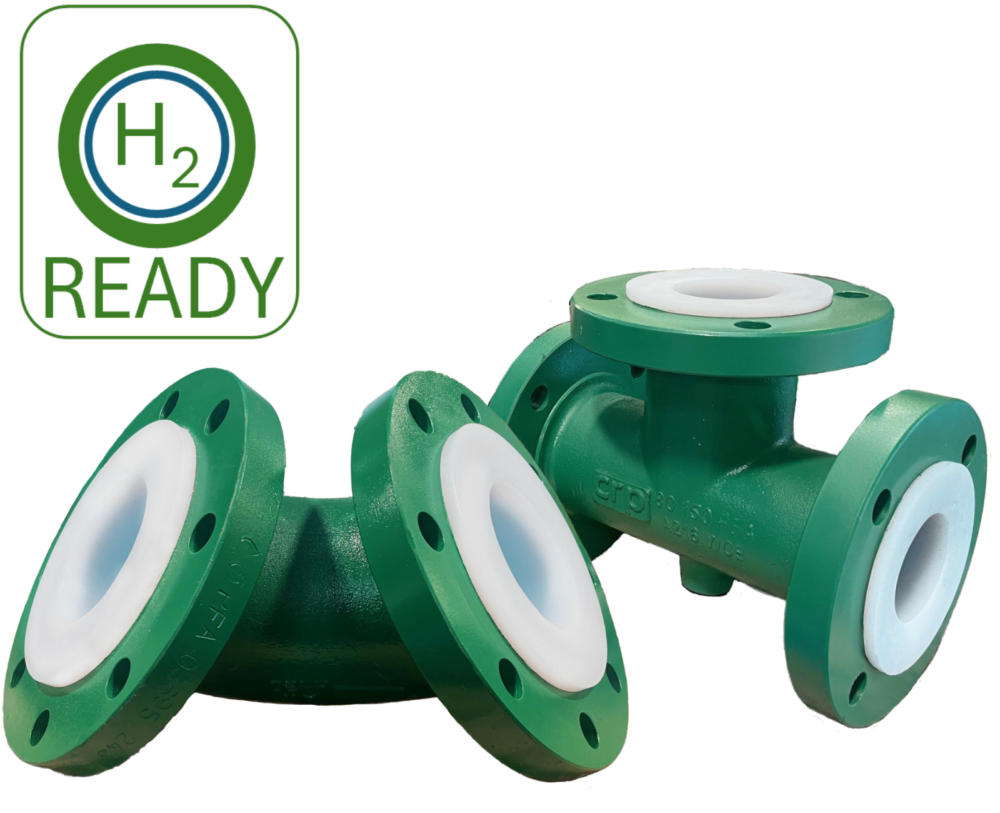
CRP uses PFA moulded liners for more complex geometries, such as tees, elbows, and other intricate components, because PFA is melt processable and can be injection moulded into precise shapes. It offers much better form stability and therefore a much higher vacuum resistance.
Despite the processing advantages, PFA still delivers the highest permeation resistance, performing significantly better than isostatically moulded liners sometimes used in the market.
While isostatic moulding offers cost benefits, it also brings significantly higher permeation rates and therefore reduced longevity — which is why CRP prioritises PFA and paste extruded materials and methods that deliver durability and long-term reliability.
Why choose an Antistatic Liner?
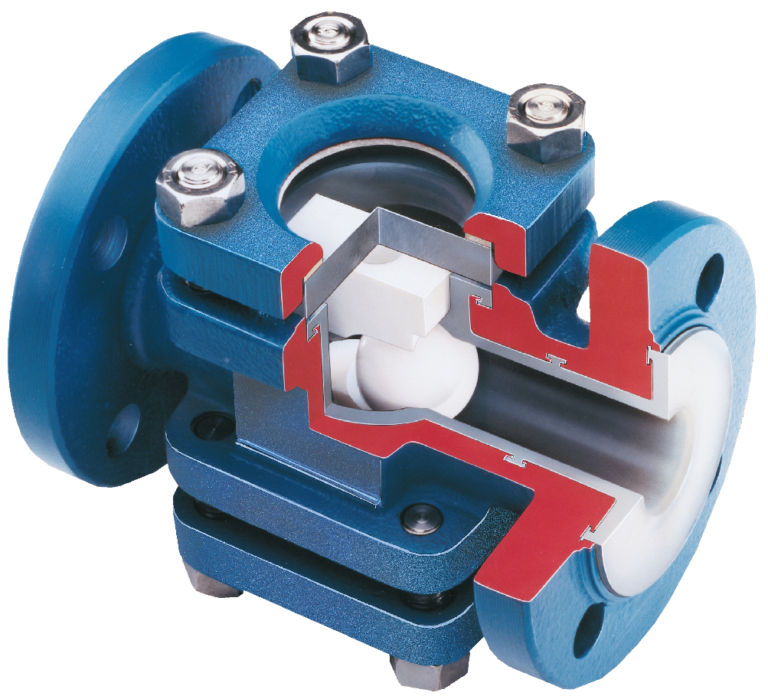
CRP manufactures static dissipative (antistatic) lined piping specifically designed for use with media that may generate electrostatic charges.
The static dissipative (antistatic) liner retains a relatively high electrical resistance (<10⁷ ohms), but its formulation prevents any static build up inside the pipe and provides an electrical connection to the steel housing, which eliminates the risk of electrostatic discharge.
This ensures safe, compliant operation in processes where both FDA certified resin materials and static control are essential.